
What Is a Practicum? Definition, Benefits, and Examples
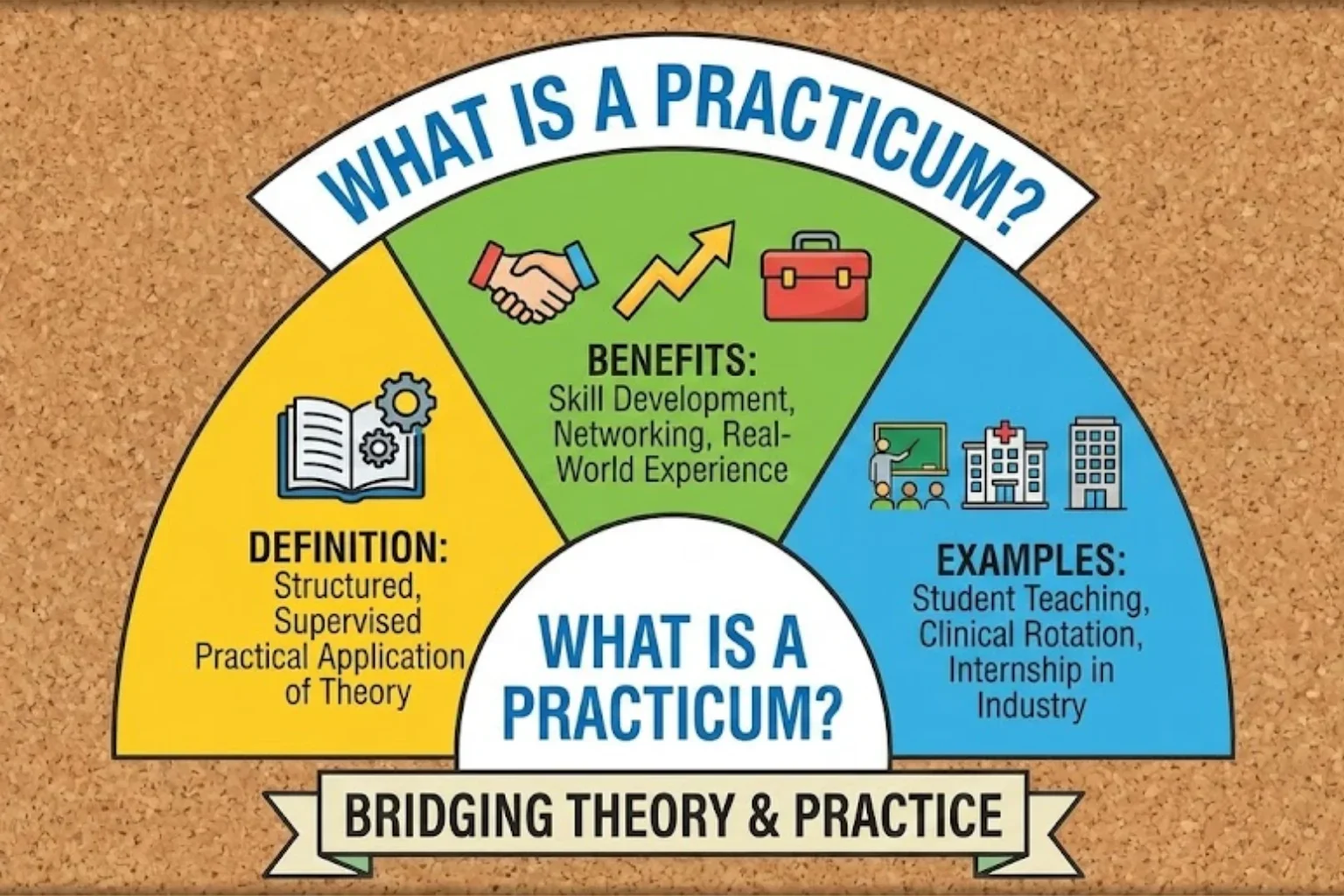
Practical experience is equally important in most working and academic programs just like knowledge theory. Here is where a practicum is very instrumental. As a student, teacher, or any other professional who is interested in the practical methods of learning, it is possible to define better what a practicum is so that you can make wise choices regarding your learning and career.
This paper defines what a practicum is and how it operates, its advantages, practical examples, and what a practicum and an internship is different.
What Is a Practicum?
A practicum is a directed and guided learning experience in which students can use theoretical knowledge in a professional or simulated practice environment. It is typically an obligatory part of educational systems like education, psychology, medical care, counseling, and social work.
Simply put, what is a practicum?
It is a mentored learning procedure wherein learning goals are tightly linked to coursework and graded by educational supervisors.
In contrast to informal working experience, a practicum is guided by strict academic criteria, learning outcomes, and assessment criteria.
Purpose of a Practicum
The primary objective of a practicum is to ensure the closing of a gap between classroom learning and professional practice. Practicum training makes sure that the students are not only learned but are also capable of applying skills on a practical and ethical basis.
Key purposes include:
Skill development under supervision
Real-world exposure within a controlled environment
Professional readiness
Confidence building
Ethical and practical application of theory
Practicum Training Explained
Practicum training is carefully designed and monitored by educational institutions. Students work in real or simulated environments while being supervised by qualified professionals.
Typical features of practicum training:
Clear learning objectives
Fixed number of required hours
Faculty supervision and evaluation
Reflection journals or reports
Performance assessments
Practicum training focuses more on learning and skill mastery than productivity or employment.
Institutions like Changa Institute emphasize structured practicum training that balances academic supervision with real-world skill development.
Practicum in Education
A practicum in education is one of the most common forms of practicum programs. It allows future teachers to gain classroom experience before becoming certified professionals.
Examples of practicum in Education:
Observing classroom teaching
Lesson planning and delivery
Classroom management practice
Student assessment participation
Working under a mentor teacher
This type of practicum ensures educators are classroom-ready and understand real teaching dynamics beyond textbooks.
Examples of Practicum Programs
Here are some real-world practicum examples across different fields:
1. Psychology Practicum
Students complete clinical experiences of supervised counseling sessions, assessment and observation in clinical settings.
2. Nursing Practicum
Nursing students are supervised in practicing patient care, medical procedures and hospital practices.
3. Education Practicum
Educators support students in classrooms, design lesson plans and coordinate students.
4. Social Work Practicum
Students either work with community organizations, and they manage case studies and client support under supervision.
These illustrations demonstrate that practicums are learning-oriented as opposed to job-oriented.
What Is a Practicum Exam?
Many programs include a practicum exam as part of the assessment process. A what is a practicum exam question often comes up among students preparing for graduation.
A practicum exam may involve:
Demonstration of practical skills
Observation-based evaluation
Case study presentations
Teaching demonstrations
Clinical performance reviews
The purpose of a practicum exam is to assess competency, professionalism, and readiness to advance in the field.
Difference Between Practicum and Internship
Understanding the difference between practicum and internship is important because both provide hands-on experience, but their purpose and structures are different.
Practicum
Focuses on learning and skill development rather than employment
Supervised by academic instructors and field professionals
Usually short-term and part of a degree program
Unpaid in most cases
Almost always offers academic credit
A practicum is designed to help students apply classroom theory in a controlled and guided environment.
Internship
Focuses on gaining real-world work experience
Supervised mainly by a workplace or company supervisor
Typically longer in duration than a practicum
May be paid or unpaid, depending on the organization
Academic credit may or may not be provided
Internships are more job-oriented and help students prepare for full-time employment.
Practicum vs Internship: Key Takeaway
In a practicum vs internship comparison, a practicum emphasizes structured learning and supervision, while an internship emphasizes workplace exposure and professional experience. Choosing between the two depends on academic requirements and career goals.
Practicum vs Internship: Which Is Better?
Neither option is universally better — it depends on your goals.
Choose a practicum if:
You are early in your academic program
You need supervised skill development
Your degree requires it
Choose an internship if:
You want workplace exposure
You are closer to graduation
You want to build employability
Understanding practicum vs internship helps students plan their educational journey more effectively.
Benefits of a Practicum
A practicum offers several academic and professional advantages:
1. Hands-On Learning
Students apply theory in real scenarios, strengthening their understanding.
2. Supervised Skill Development
Mistakes become learning opportunities under expert guidance.
3. Professional Confidence
Practical exposure reduces anxiety and builds competence.
4. Ethical Practice
Students learn professional standards and boundaries.
5. Career Readiness
Graduates enter the workforce better prepared.
Who Needs a Practicum?
A practicum is especially important for:
Education students
Psychology and counseling students
Healthcare professionals
Social workers
Therapists and clinicians
Theory is not enough to develop competence in these areas.
In the case of learners who need the organized, supervised practice, specific practicum programs may offer guided practice in the field.
Final Thoughts
A practicum is a critical learning experience because it converts the theory to practical skills. This knowledge of the concept of a practicum, the mechanism of practicum training, and the distinction between a practicum and internship enables students to make sound academic and career choices.
Be it a practicum in education, health care, or psychology, this type of learning exposes the graduate to more than just the paperwork but proves that he or she is also competent in practice.