
7 Trauma Release Exercises to Reduce Stress Fast
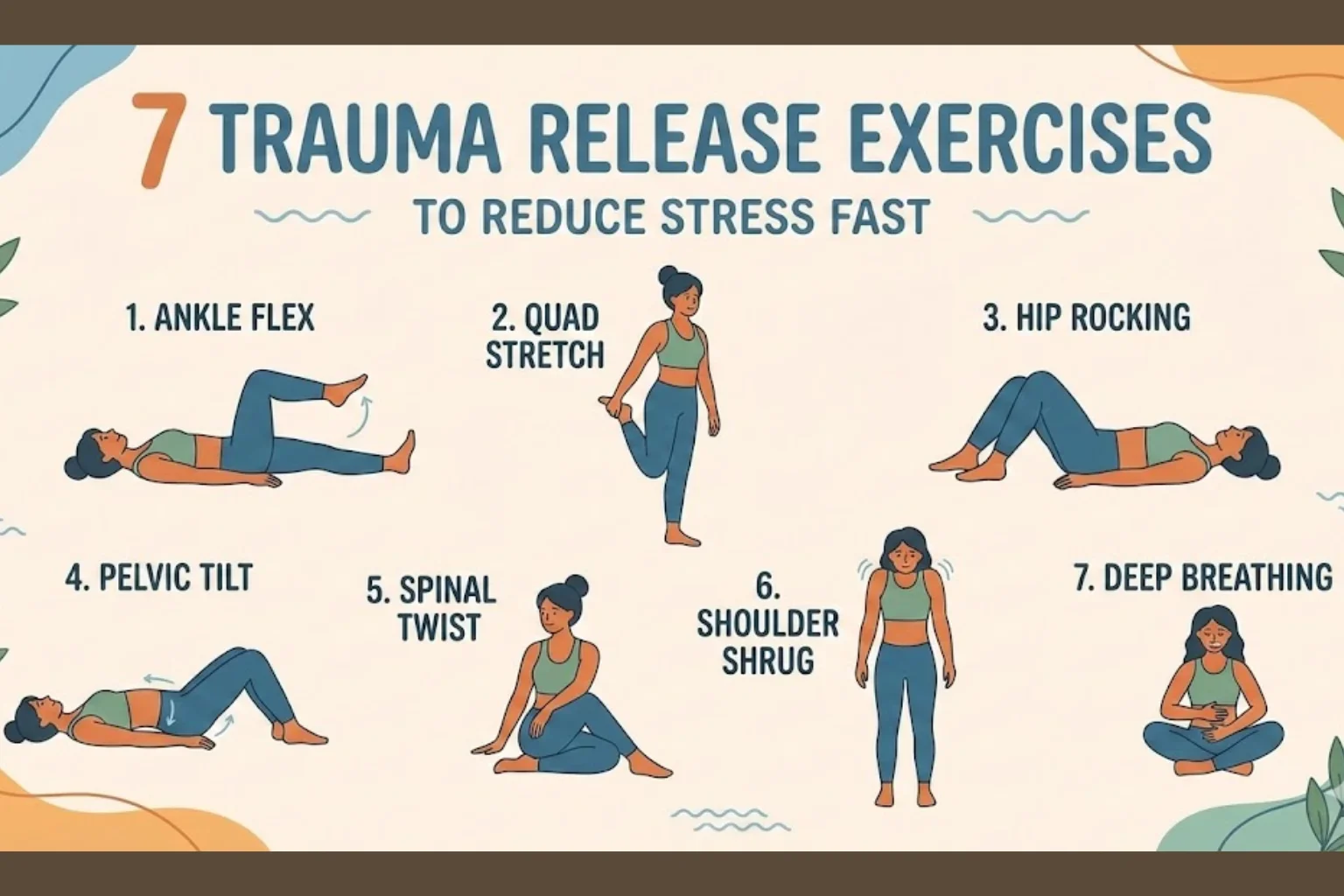
Modern life places our nervous system under constant pressure. Unprocessed stress, emotional shocks, and unresolved experiences can quietly accumulate in the body, leading to anxiety, burnout, and chronic tension. This is where trauma release exercises come in — simple, body-based techniques designed to help release stored stress and restore balance.
In this guide, you’ll learn 7 trauma release exercises to reduce stress fast, understand how tension and trauma releasing exercises work, and explore how they fit into the 4 stages of trauma recovery.
What Are Trauma Release Exercises?
Trauma release exercises (TRE) are gentle physical movements that activate the body’s natural tremor mechanism. This tremoring response allows the nervous system to discharge excess stress safely and organically.
Unlike traditional talk therapy, a trauma-releasing exercise works directly with the body. Trauma isn’t only stored in the mind — it’s held in muscles, fascia, and the nervous system. TRE helps the body complete interrupted stress responses, allowing relaxation to return.
Benefits of trauma release exercises include:
Reduced anxiety and emotional overwhelm
Relief from muscle tightness and chronic tension
Improved sleep quality
Increased emotional resilience
Faster stress recovery
How Tension and Trauma Releasing Exercises Work
When the body experiences stress or trauma, it enters fight, flight, or freeze mode. If the stress isn’t fully released, the nervous system stays stuck in survival mode.
Tension and trauma releasing exercises gently fatigue specific muscle groups (especially around the hips and legs), triggering involuntary shaking. This shaking is not dangerous — it’s a natural reset mechanism used by mammals in the wild after stress.
Over time, this process retrains the nervous system to move back into safety and calm more easily.
7 Trauma Release Exercises to Reduce Stress Fas
1. Grounded Breathing with Body Awareness
This exercise prepares your nervous system for release.
How to do it:
Lie on your back with knees bent
Place one hand on your chest and one on your belly
Inhale slowly through your nose, exhale through your mouth
Notice sensations without judgment
Why it works:
Slow breathing signals safety to the nervous system and reduces cortisol levels.
2. Ankle Flex and Release
A gentle way to awaken the tremor response.
How to do it:
Lie down with knees bent
Press your heels into the floor
Slowly raise and lower your ankles
Continue for 2–3 minutes
Why it works:
This lightly activates lower-body tension where trauma is often stored.
3. Hip Bridge Hold
A classic trauma releasing exercise targeting the psoas muscle.
How to do it:
Lie on your back, feet flat
Lift hips into a bridge position
Hold for 30–60 seconds
Lower slowly
Why it works:
The psoas is deeply connected to fear and stress responses.
4. Wall Sit for Nervous System Activation
This exercise builds controlled fatigue.
How to do it:
Stand against a wall
Slide down into a seated position
Hold until legs gently shake
Stand up and rest
Why it works:
Muscle fatigue triggers involuntary tremors that release stored tension.
5. Butterfly Leg Tremor
One of the most effective trauma release exercises.
How to do it:
Lie on your back
Bring the soles of the feet together
Let knees fall open
Slowly bring your knees together and apart
Why it works:
This position naturally activates tremoring in the hips and thighs.
6. Spontaneous Tremor Observation
Allow the body to do the work.
How to do it:
Lie comfortably
Let tremors happen without control
Breathe slowly
Observe sensations
Why it works:
Letting go of control allows the nervous system to self-regulate.
7. Grounding and Integration
Never skip this final step.
How to do it:
Place your feet flat on the floor
Name 5 things you can see
Take slow breaths
Notice calm returning
Why it works:
Integration prevents emotional overwhelm and restores stability.
The 4 Stages of Trauma Recovery
Understanding where trauma release exercises fit requires knowing the 4 stages of trauma recovery:
1. Safety and Stabilization
Learning to feel safe in the body through grounding and breathwork.
2. Processing and Release
Using trauma releasing exercises to discharge stored stress.
3. Integration
Making sense of experiences and rebuilding nervous system flexibility.
4. Reconnection
Reconnecting with life, relationships, and purpose with resilience.
TRE primarily supports Stages 1 and 2, creating a foundation for deeper healing.
For those in the reconnection phase, exploring a structured course library can provide deeper learning and long-term nervous system support.
Who Can Benefit from Trauma Release Exercises?
These exercises are helpful for:
People with chronic stress or burnout
Individuals recovering from emotional or physical trauma
Those experiencing anxiety or restlessness
Anyone seeking nervous system regulation
Changa Institute emphasizes holistic, body-based approaches that respect the nervous system’s natural healing intelligence.
Safety Tips Before You Begin
Start slowly and keep sessions short
Stop if emotions feel overwhelming
Stay hydrated
Practice in a quiet, safe environment
Consider professional guidance if you have severe trauma
Trauma release is not about forcing results — it’s about allowing the body to feel safe enough to let go.
If you feel you need personalized guidance, a professional consultation can help you apply trauma release exercises safely and effectively.
Final Thoughts
Trauma doesn’t disappear through willpower alone it must be released through the body. These 7 trauma release exercises to reduce stress fast offer a practical, science-backed way to calm your nervous system, release stored tension, and move toward healing.
With consistency, patience, and self-compassion, tension and trauma releasing exercises can become a powerful part of your daily wellness routine helping you return to balance, clarity, and inner calm.
Frequently Asked Questions (FAQs)
1. What are trauma release exercises?
Trauma release exercises are gentle, body-based movements designed to help the nervous system release stored stress and trauma. These exercises activate natural tremors in the body, allowing tension to discharge safely and restoring a sense of calm and balance.
2. How do trauma release exercises reduce stress fast?
Trauma release exercises work by calming the nervous system and completing unfinished stress responses. When the body releases built-up tension through controlled tremors, stress hormones decrease, muscles relax, and the body shifts out of fight-or-flight mode more quickly.
3. Are trauma-releasing exercises safe for beginners?
Yes, most trauma-releasing exercises are safe for beginners when practiced gently and mindfully. It’s important to start slowly, listen to your body, and stop if you feel overwhelmed. People with severe trauma should consider guidance from a trained professional.
4. How often should I practice trauma release exercises?
For most people, practicing trauma release exercises 2–3 times per week is effective. Short sessions of 10–20 minutes are usually enough to experience benefits without overloading the nervous system.
5. What is the difference between trauma release exercises and regular stretching?
While stretching focuses on flexibility, tension and trauma-releasing exercises target the nervous system. Their goal is not muscle lengthening but activating involuntary tremors that help release deeply stored stress and trauma from the body.