
What Eli Lilly’s $3.8 Billion AtaiBeckley Deal Means for Psychedelic Medicine

When one of the world’s largest pharmaceutical companies commits billions of dollars to a psychedelic drug developer, the central question is not whether psychedelics have finally entered the mainstream.
The more important question is this: What clinical, regulatory, and professional infrastructure will be needed if psychedelic-derived treatments become part of conventional mental healthcare?
On July 16, 2026, Eli Lilly and Company announced a definitive agreement to acquire AtaiBeckley, a clinical-stage biopharmaceutical company developing rapid-acting treatments for mental health conditions.
According to the official Eli Lilly and AtaiBeckley acquisition announcement, the transaction includes approximately $2.8 billion in upfront cash, plus the potential for another $1 billion in milestone-based payments. That brings the possible total value of the acquisition to approximately $3.8 billion.
This does not prove that psychedelic medicine has completed its transition into routine clinical care. It does show that major pharmaceutical organizations now see enough scientific, clinical, and commercial potential to invest at an unprecedented scale.
For therapists, healthcare providers, coaches, facilitators, educators, and mental health professionals, the acquisition should be understood as a call for greater clinical literacy and professional preparation, not greater hype.
Why Eli Lilly Is Acquiring AtaiBeckley
At the center of the acquisition is BPL-003, also known as mebufotenin benzoate. It is a synthetic, intranasal formulation of 5-MeO-DMT being developed for treatment-resistant depression.
AtaiBeckley was formed through the strategic combination of atai Life Sciences and Beckley Psytech. The companies announced the successful completion of that combination in November 2025, bringing their scientific expertise and investigational pipelines together under the AtaiBeckley name.
The combined company identified BPL-003 as its lead program and described it as a Phase 3-ready mebufotenin benzoate nasal spray. AtaiBeckley’s broader pipeline also includes VLS-01, a DMT-based candidate being studied for treatment-resistant depression.
Under the Lilly agreement, shareholders will receive $6.75 per share in cash. They may also receive up to an additional $2.50 per share if specified development, approval, and rescheduling milestones are achieved for BPL-003 and VLS-01.
Those milestones include:
VLS-01 advancing into Phase 3 development
BPL-003 receiving FDA approval and DEA rescheduling
VLS-01 receiving FDA approval and DEA rescheduling
These conditions matter. Neither BPL-003 nor VLS-01 is currently approved by the FDA. A major acquisition does not guarantee clinical success, regulatory approval, insurance coverage, or widespread patient access.
The deal gives Lilly control of a promising late-stage pipeline, but the compounds must still demonstrate an acceptable balance of safety and effectiveness through further development and regulatory review.
What Is 5-MeO-DMT?
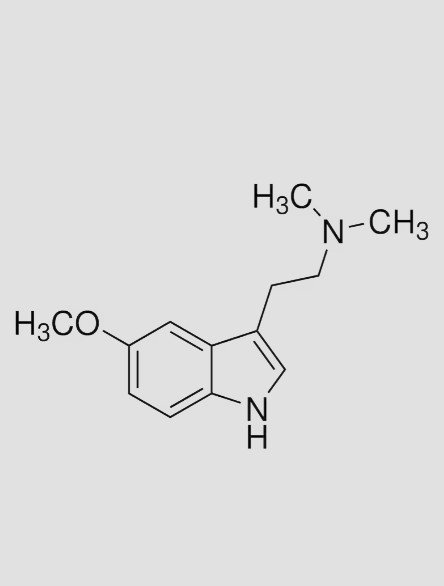
5-MeO-DMT, or 5-methoxy-N,N-dimethyltryptamine, is an extremely potent and fast-acting psychedelic compound.
It occurs naturally in several plant species and in secretions from the Sonoran Desert toad, which has also been called the Colorado River toad or Bufo alvarius. The compound can also be produced synthetically, as it is for pharmaceutical candidates such as BPL-003.
A peer-reviewed scientific review of 5-MeO-DMT describes the compound as a powerful psychedelic associated with rapid and profound changes in consciousness.
Reported experiences may include:
A temporary dissolution of the ordinary sense of self
Mystical-type or nondual experiences
Significant changes in the perception of time and space
Feelings of unity or interconnectedness
Intense emotional or existential experiences
Its comparatively short duration is one reason 5-MeO-DMT has attracted pharmaceutical interest. A shorter administration period could potentially reduce the amount of time required in a supervised clinical setting compared with longer-acting psychedelic compounds.
However, short-acting does not mean simple or low-risk.
The rapid onset and intensity of 5-MeO-DMT can create substantial psychological and physiological demands. Responsible investigation must address medical screening, medication interactions, psychological vulnerability, preparation, professional supervision, emergency procedures, and post-session support.
The development of synthetic 5-MeO-DMT also avoids dependence on wildlife-derived secretions. This distinction is important because demand for toad-derived material can raise ecological, conservation, animal-welfare, and dosing concerns.
This Acquisition Is About More Than One Compound
Pharmaceutical companies do not invest billions of dollars solely because a substance produces an unusual subjective experience.
They invest when a treatment may address a significant unmet need, produce defensible clinical results, navigate regulatory review, and fit within a scalable healthcare model.
Treatment-resistant depression remains one of the most difficult challenges in mental healthcare. It generally refers to depression that has not improved adequately after multiple appropriate treatment attempts.
BPL-003 has been evaluated as a potential treatment for this population in structured clinical protocols. The registered BPL-003 clinical trial for treatment-resistant depression examined the safety and potential effectiveness of a single administration delivered with psychological support.
The Lilly acquisition suggests that rapid-acting neuropsychiatric treatments are becoming a serious component of major pharmaceutical research and development.
It also makes several unresolved questions more urgent:
What preparation should patients receive before treatment?
Who should provide psychological support?
How will safety be monitored outside controlled trials?
What training will supporting professionals need?
How will adverse events be defined and reported?
Will reimbursement cover preparation and follow-up care?
Can treatment become more efficient without being reduced to drug administration alone?
The acquisition cannot answer these questions. It increases the need to address them.
What This Means for Psychedelic Professionals

The deal does not mean that therapists, coaches, or psilocybin facilitators will soon be authorized to administer 5-MeO-DMT.
FDA approval of a drug would not automatically permit every practitioner to deliver it. Future access would depend on the approved label, DEA scheduling, state laws, scope-of-practice requirements, healthcare regulations, and any additional risk-management standards.
The regulated psilocybin systems overseen by the Oregon Health Authority and the Colorado Department of Regulatory Agencies are also separate from the federal pharmaceutical pathway.
State-licensed psilocybin facilitation and an FDA-approved 5-MeO-DMT treatment would operate under different legal, clinical, and professional structures.
Still, this acquisition points toward an important career outcome: increasing demand for professionals who can work responsibly at the intersection of psychedelic science, mental health, ethics, regulation, and human support.
Future clinical trials and care systems may require professionals with skills in:
Participant preparation and informed consent
Trauma-informed support
Recognition of contraindications and safety concerns
Psychological support within a clearly defined professional scope
Culturally responsive care
Interdisciplinary communication
Ethics, documentation, and regulatory compliance
Integration and continuity of care
The strongest career opportunities will not go to people who simply understand psychedelic terminology. They will go to practitioners who can combine scientific knowledge with ethical judgment, regulatory awareness, and disciplined client-centered practice.
Pharmaceutical Investment Is Not the Same as Stewardship
It is reasonable to view Lilly’s investment as evidence that psychedelic drug development is maturing.
It is also reasonable to question whether large pharmaceutical organizations can preserve the relational, contextual, and ethical elements that may influence psychedelic treatment outcomes.
Capital can support expensive Phase 3 trials, manufacturing systems, regulatory submissions, clinician education, and national distribution. Those capabilities may help promising treatments reach patients who would otherwise never encounter them.
Scale also creates pressure for efficiency, standardization, intellectual-property protection, and financial return.
The field must continue asking which elements of treatment should be standardized and which must remain responsive to the individual receiving care.
Eli Lilly’s acquisition of AtaiBeckley is not the conclusion of psychedelic medicine’s emergence. It is evidence that the field is entering a more demanding phase.
The next chapter will require professionals who can do more than celebrate scientific progress. It will require people prepared to evaluate evidence, understand regulation, protect patient safety, and preserve the human dimensions of care.
Read the full Eli Lilly and AtaiBeckley acquisition announcement.
