
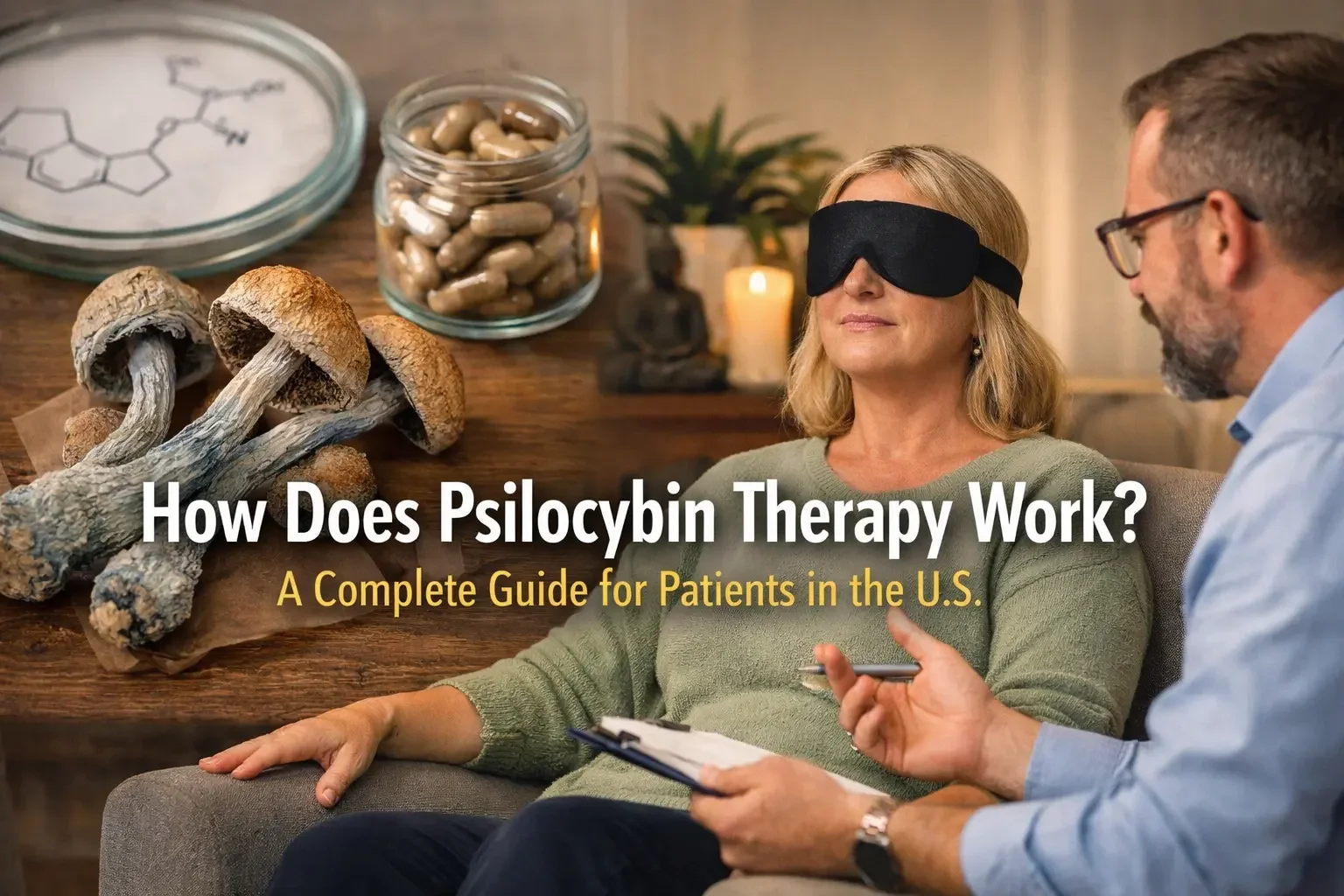
Psilocybin therapy is a measured dosage of psilocybin-a naturally occurring psychedelic within a particular type of mushroom-paired with therapeutic support before, during, and after the session. With some using it as a means of recreation, psilocybin therapy takes place within a clinical setting with trained therapists to walk a patient through the process before, during, and after the session. Studies indicate that the substance changes the connectivity in the brain, especially where rigid thinking occurs, which can release the patient from trauma, depression, and anxiety in a new manner. Though Schedule I, with a federal ban, numerous studies are underway in America and in some states to alleviate conditions like treatment-resistant depression and post-traumatic stress disorder.
What Is Psilocybin Therapy?
Psilocybin is said to be a naturally occurring compound in over two hundred mushroom species. When taken into the system, the compound breaks down into psilocin. Psilocin works by acting on the serotonin receptors in the brain.
The psilocybin therapy, also referred to as Psilocybin Assisted Therapy, is a medical procedure, where psilocybin is used in combination with psychotherapy. This is far from taking a substance and expecting a miracle. This treatment ensures screening, preps the psychology, has guided sessions with professional help, and then has integration sessions where the individual tries to understand their experiences.
This is light-years away from recreational use. For one thing, in professional settings, one is administering exact doses within a stimulus-free environment and is prepared to deal with any consequences that may arise from it.
How does Psilocybin Therapy function in the brain?
Psilocybin’s main action happens on the serotonin 2A receptor found in the brain, specifically at the prefrontal cortex region of the brain. It causes a series of alterations in brain activity and connections.
Studies from the likes of Johns Hopkins University reveal that psilocybin suppresses activity in the DMN but facilitates the connection between areas of the brain that do not usually communicate with each other. It induces a heightened state of neuroplasticity because the brain can now develop new pathways.
It’s like the grooves of a well-worn record relax. Depression and trauma are basically producing stuck patterns of thinking. Psilocybin may help the brain temporarily break out from this, creating opportunities for new perspectives and emotional processing to percolate and persist long after it’s gone from the system.
Step by Step: What Occurs in Psilocybin
Psilocybin therapy involves three stages:
Preparation phase
Treatment sessions with therapists preceding any administration of psilocybin
Establishing Trust and Therapeutic Goals
Education about what to expect during the experience
Psychological tests to check both safety and readiness
Fostering a comfortable, supportive treatment environment
Dosing Session
Conducted in a quiet and regulated environment (usually a room meant to represent a safe and comfortable environment)
Patient is administered an accurate dose of pharmaceutical-grade psilocybin
Two trained therapists usually present in the 6 to 8 hour session.
Patient wears eyeshades and listens to music that is carefully selected
They offer support and encouragement, and allow the experience to happen in its own way
No driving allowed until the effects wear off.
Integration Phase
Follow-up therapy sessions after the dosing experience
Working with insights, feelings, and experiences that emerged during the session
Analyzing how the experience connects to changes in behavior that can
Follow-through psychological help as the benefit evolves over time
Indeed, it would be safe to say that integration might be the most vital piece of this endeavor. Otherwise, it may not be possible to derive any therapeutic benefits from what has been learned through psilocybin.
For what conditions is psilocybin therapy being used?
Trials are being conducted for psilocybin therapy in the United States for the following mental health issues:
Major Depressive Disorder: Most striking results have been observed for treatment-resistant depression, and many patients benefited from it within one or two sessions.
PTSD: Current studies explore the feasibility of psilocybin for helping individuals with this condition process traumatic events.
Anxiety Disorders: Among them are generalized anxiety disorder and anxiety because of a life-threatening illness.
Existential Distress at the End of Life: Studies in cancer patients have shown that psilocybin is effective in reducing existential anxiety, improving quality of life.
It is important to note that the usage of psilocybin therapy is still somewhat experimental in the US. Mostly, it is used in research studies and trials. However, the FDA declared the usage of psilocybin as a “Breakthrough Therapy” in the treatment of depression that is treatment-resistant.
Does Psilocybin Therapy have legal status in the United States?
The legal scenario is complicated and changing by the hour.
Federal Level: Psilocybin continues to be classified as a Schedule I controlled substance, and hence, it is illegal at the federal level except for approved research.
State and Local Level: Some jurisdictions have established avenues for therapeutic use legally:
Oregon became the first state to legalize psilocybin therapy services when voters approved Ballot Measure 109 in 2020. Now, licensed psilocybin centers are operating in the state.
Colorado voters passed the same legislation and are in the process of implementation
Some cities have decriminalized possession or deprioritized enforcement
Clinical Trials: Currently recruiting at major universities and research centers all over the country, these are research studies approved by the FDA.
People thinking about psilocybin therapy should be aware of the current legal status in their location and pursue treatment only through legitimate, licensed, or research-approved channels.
Psilocybin Therapy Centers and Accessing Care in Your Area
Even as it gains popularity, most Americans turn to search terms like “psilocybin therapy near me” as they look for alternatives. Here’s the information.
Licensed Therapy Centers: As of now, it’s only in Oregon, and soon in Colorado, where legal psilocybin service centers are being run under government-regulated guidelines. These centers have to follow strict guidelines regarding training and operations.
Clinical Trials: Research institutions such as Johns Hopkins, NYU, UCSF, and many more are engaged in FDA-approved clinical research studies with psilocybin. Participants receive free therapy but with specified requirements.
Educational Resources: Entities such as the changa Institute serve as sources of information regarding psychedelic-assisted therapies and how they function. These sources are valuable alternatives for individuals wishing to explore the applicable use of psilocybin therapy.
Critical Note: Care should be exercised when seeking treatment from illegal practitioners, carrying out underground sessions, or persons advertising Psilocybin therapy through illegal means.
Benefits and Risks of Psilocybin Therapy
Potential Benefits:
Take effect quickly to reduce symptoms of depression
Emotional processing and self-awareness
Anxiety and existential distress are reduced
Increased sense of meaning and connection
Lasting effects from a single session, which may be several months long
Risks and Limitations:
Specifically challenging psychological experiences during sessions
Temporary episodes of anxiety or confusion
Not suited for patients with certain psychiatric disorders (such as psychosis/schizophrenia)
Takes a long time to complete when following through on entire protocol
Limited access and potentially high costs
Long-term effects still being researched
However, professional screening and care can minimize risks. This is why a full psychological assessment always precedes a genuine psilocybin therapy.
Who Should and Should Not Use Psilocybin Treatment
Good candidates may include:
Patients with treatment-resistant depression or anxiety disorders
Persons who have not been responding well to conventional treatment methods
Those who are willing to undertake psychological preparation and integration
Persons with realistic expectations regarding the process
Who Should Avoid Psilocybin Therapy:
Persons with family/personal histories of psychotic disorders
Persons with certain heart conditions
Pregnant or breastfeeding women
People unable to commit to the full therapeutic protocol
Persons looking for a quick fix solution rather than working on the therapy aspects.
A medical screen is very important in establishing suitability and safety.
How is Psilocybin Therapy different from Traditional Therapy?
Talking therapy traditionally involves working on the problem incrementally with the patient over a series of ongoing consultations with the aim of creating understanding and strategies for coping with the condition. It’s very effective but time-consuming.
Psilocybin therapy can create radically new shifts in thinking that occur from just one to two sessions, although these changes take weeks to integrate. The benefit is described by patients as taking months worth of conventional therapy and packing it into just a few hours, involving moments that occur on a visceral, rather than intellectual, level.
These neurobiological effects, particularly its greater plasticity, may potentially free a patient from such a pattern quicker than talking therapy would alone. However, psilocybin therapy is not an alternate model of convention therapies; it is merely a new tool to be combined with psychology.
Final Thoughts: Is Psilocybin Therapy Right for You?
Psilocybin therapy is an exciting arena in mental health therapies that is increasingly scientifically validated and offers hope to those individuals whose previous treatments were ineffective via other means. But it is not a magic bullet solution that suits all individuals.
If you are interested in this treatment, begin by educating yourself from credible sources. Research whether clinical trials are an option near you. If you live in Oregon or Colorado, look into state licensed centers. Talk with mental professionals who are knowledgeable about psyThese resources are important options for persons interested in learning about the viability of psilocybin therapy in their circumstances.
Critical Note: One should be extremely cautious about consulting unlicensed practitioners, conducting under-ground sessions, or people advertising the use of Psilocybin therapy in illicit means.
Most importantly, be patient. As research grows and regulations change, it’s likely that safe, legal access to psilocybin therapy will increase. Taking the time to be informed instead of rushing into something that may be unregulated is important for both your safety and your successful outcome.
Institutions such as the changa Institute will help you stay updated on developments related to psychedelic therapy and will give you a clear understanding of what constitutes proper therapy. Whether you end up using psilocybin therapy as part of your healing or not, options in mental health care have never been better.