
FDA Is Building a Faster Path for Psychedelic Medicines. A More Complete Care Model Is Taking Shape.
The U.S. Food and Drug Administration is signaling that it wants to help promising psychedelic medicines reach patients more efficiently.
That does not mean the agency has approved psilocybin, MDMA, ibogaine, or any other psychedelic for psychiatric treatment. It also does not mean that the scientific questions surrounding these interventions have been resolved.
What has changed is the level of federal attention.
On September 14, 2026, the FDA convened a four-hour public hearing on the potential future therapeutic use of psychedelic drugs. Approximately 80 invited speakers addressed a federal panel that included representatives from the FDA, the National Institute on Drug Abuse, the Veterans Health Administration, the Substance Abuse and Mental Health Services Administration, and the Advanced Research Projects Agency for Health.
The hearing followed the publication of a framework from FDA officials describing ways the agency may accelerate psychedelic drug development while maintaining its standards for safety and effectiveness.
Together, these developments reveal a field moving closer to formal medical integration. They also expose a problem that drug approval alone cannot solve: psychedelic treatment is usually studied as more than a pharmacological event.
The unresolved question is what kind of care must surround the medicine.
The Hearing Was About Delivery as Much as Approval
The hearing included comments on clinical research, provider training, credentialing, patient safety, access, reimbursement, data collection, and public education.
Many speakers asked federal officials to view a psychedelic not as an isolated product, but as one component of a broader intervention. In most clinical trials, participants do not simply receive a capsule and leave. They undergo medical and psychiatric screening, preparation, hours of supervised administration, follow-up assessment, and some form of psychological support or integration.
That creates an unusual regulatory problem.
The FDA regulates drugs and medical products. It does not regulate the practice of psychotherapy. State licensing boards, professional organizations, healthcare institutions, payers, and individual clinicians govern many of the services that may accompany treatment.
If a psychedelic drug is eventually approved, its label could specify conditions for administration and monitoring. A Risk Evaluation and Mitigation Strategy, or REMS, could impose additional safety requirements. Yet neither mechanism automatically creates a qualified workforce, a reimbursement model, or a consistent standard for psychological care.
The hearing therefore moved beyond the narrow question of whether a molecule works. It raised the harder question of how a complete treatment model can be evaluated, authorized, paid for, and delivered.
Psychological Support Is Not a Single Intervention

One of the most important distinctions raised at the hearing concerned the phrase “psychological support.”
That phrase can refer to very different levels of care.
At one end is safety monitoring. A trained professional remains present, observes the patient, responds to distress, and coordinates medical intervention if necessary.
The next level may include non-directive psychological support. The professional helps create a stable environment, offers reassurance, and assists the patient without conducting a defined psychotherapy protocol.
A more intensive model may include formal psychotherapy before, during, or after dosing. That approach requires its own clinical theory, training standards, documentation, supervision, and scope-of-practice rules.
These models should not be treated as interchangeable.
At the hearing, some commenters argued that psychedelic treatment should be understood as psychedelic-assisted therapy, with preparation and integration recognized as central components. Others warned that requiring psychotherapy for every approved psychedelic could make treatment prohibitively expensive and limit access for people who are uninsured, underinsured, or unable to reach specialized centers.
One proposal was for product labels to reflect the model actually supported by the evidence: safety monitoring, psychological support, or psychotherapy.
That approach has clinical logic. It also raises a demanding evidentiary question. Most psychedelic trials have not been designed to isolate the contribution of each component. If all participants receive preparation, supervised dosing, and integration, researchers cannot easily determine how much improvement came from the drug, the therapeutic relationship, expectancy, the setting, or their interaction.
The field needs greater precision. “Support” cannot remain a catch-all term if it determines who may provide care, what insurers will cover, and which elements are considered necessary for safety or benefit.
The Label May Shape Access Long After Approval

Drug labeling can appear technical, but it may determine how psychedelic care develops in practice.
Insurers often build coverage policies around the approved label and related regulatory requirements. If the label requires administration in a certified clinical setting with specific monitoring, payers must decide whether they will reimburse the personnel, facility time, and associated services. If psychotherapy is described as part of the evidence-based intervention but is not covered, patients may receive the medicine without the care model used in trials.
The opposite problem is also possible. A highly restrictive model could make treatment available in theory but inaccessible in practice.
Several hours of professional supervision can be expensive. Requiring multiple clinicians, specialized facilities, extensive preparation, and mandatory integration may increase safety in some circumstances, but it may also concentrate treatment in major cities and place it beyond the reach of many patients.
This is not an argument for minimal oversight. It is an argument for requirements that are proportionate to the evidence and specific to the product.
Speakers at the hearing urged the FDA to avoid applying one risk-management template to every psychedelic. Psilocybin, MDMA, ibogaine-derived compounds, and shorter-acting agents differ in pharmacology, duration, cardiovascular effects, psychological intensity, and potential clinical use. Their safeguards may need to differ as well.
A product-specific approach could allow regulators to establish a strong initial safety floor while revising requirements as evidence accumulates. It could also reduce the risk of importing assumptions from one drug or indication into another.
Faster Development Does Not Eliminate the Evidence Problem
FDA officials have described tools that could shorten the path from clinical development to review. These may include rolling submissions and priority review. The emerging framework also suggests that an initial approval could be based on a clinically meaningful period of demonstrated benefit, while longer blinded follow-up continues and questions about repeated dosing are addressed after approval.
Speed, however, does not correct weak study design.
Psychedelic trials face a persistent problem with functional unblinding. When a drug produces noticeable alterations in perception, emotion, or consciousness, participants and clinicians can often infer whether the active treatment was received. Expectations may then influence symptom reports, therapeutic interactions, and outcome assessments.
Small samples create additional uncertainty. So do selective eligibility criteria, inconsistent support protocols, short follow-up periods, and reliance on self-reported outcomes.
The FDA’s finalized guidance for psychedelic drug investigations identifies many of these challenges. It discusses control selection, dose-response assessment, durability of effect, safety monitoring, abuse potential, and the need to characterize the contribution of psychotherapy or other supportive interventions.
An accelerated regulatory pathway can reduce administrative delay. It cannot substitute for credible controls, adequate statistical power, independent assessment, or transparent reporting.
For clinicians, the distinction is essential. “Faster review” does not mean “lower uncertainty,” and regulatory approval does not mean that every practical question has been answered.
Approval May Be the Beginning of Evidence Collection

Several hearing participants called for stronger real-world data systems, including registries that capture information often omitted or inconsistently reported in trials.
Useful data could include:
Patient diagnoses, medical conditions, medications, and prior treatment history
The product, dose, dosing interval, and administration setting
The training and professional role of each provider
The form and duration of preparation and follow-up support
Patient expectations and intentions before dosing
Acute adverse events and delayed psychological or medical effects
Changes in symptoms, functioning, quality of life, and healthcare use
Reasons for discontinuation, retreatment, or escalation of care
This level of detail matters because psychedelic treatment is highly contextual. Two clinics may administer the same dose while providing very different screening, preparation, monitoring, and follow-up.
If those differences are not recorded, post-market evidence may tell us that outcomes vary without showing why.
Registries are not a replacement for randomized trials. They are vulnerable to selection bias, missing data, inconsistent reporting, and confounding. But they can identify rare adverse events, reveal how treatment performs in populations excluded from trials, and generate hypotheses about which care models work best.
The strongest system would connect pre-approval trials, post-market studies, adverse-event reporting, and standardized clinical registries. Approval should mark a transition from controlled evidence generation to broader evidence generation, not the end of scientific scrutiny.
Public Education Must Accompany Medicalization
FDA approval carries meaning beyond the clinic.
The public may interpret approval as proof that a substance is broadly safe, effective for many conditions, or appropriate outside supervised care. None of those conclusions necessarily follows from approval for a specific product, dose, population, indication, and delivery model.
This is particularly important in psychedelics, where medical research, underground practice, religious use, wellness marketing, and decriminalization campaigns often occupy the same public conversation.
A future approval would apply to a defined medical product under defined conditions. It would not validate every source of psilocybin, every facilitation model, or every claimed use. It would not establish safety for people excluded from trials. It would not remove the need for screening or make self-treatment evidence-based.
Public education should communicate both potential and boundaries. Patients need to understand what was studied, what remains uncertain, which adverse effects require help, and how to distinguish licensed treatment from services that borrow medical language without equivalent safeguards.
The hearing included a reminder of the stakes when a parent described the death of her daughter following psychedelic use and urged officials not to treat public education as an afterthought. A responsible system must make room for adverse experiences and dissenting evidence, even when the surrounding policy environment is optimistic.
The Hearing’s Limits Are Also Informative
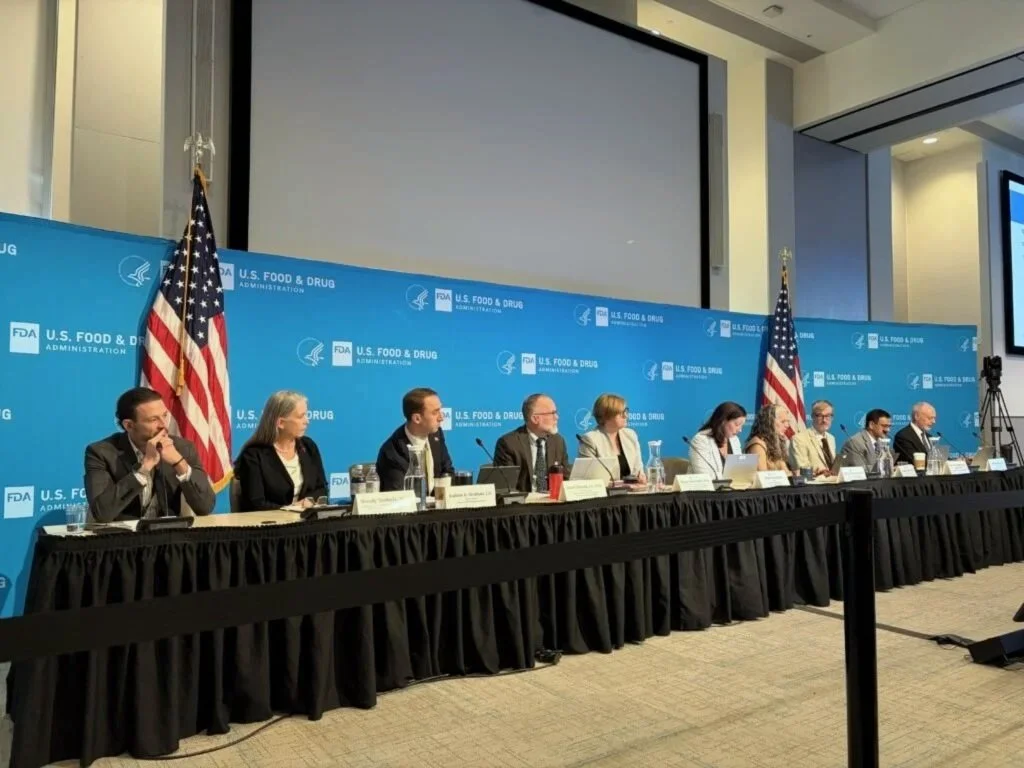
The hearing demonstrated substantial interest, but it did not provide a balanced scientific adjudication of psychedelic medicine.
The speakers were given approximately two minutes each. Many represented research organizations, advocacy groups, training programs, or companies with an interest in the field. According to Psychedelic Alpha, positive testimony greatly outnumbered critical testimony.
The federal panel asked no follow-up questions.
That silence limits what can be inferred about agency priorities. The event showed what stakeholders wanted federal officials to hear, but it did not reveal which proposals regulators found persuasive, which concerns they considered unresolved, or how competing recommendations will be weighed.
This distinction matters when interpreting public hearings. Convening a meeting signals attention. It does not signal agreement, endorsement, or an impending approval.
The most reliable indicators will come later through guidance, product-specific review decisions, labeling, REMS requirements, advisory committee materials, and post-market obligations.
What Clinicians and Training Programs Should Prepare For
The hearing does not provide a final practice standard, but it identifies the areas in which competent psychedelic care will likely be judged.
Training programs should be able to explain which role they prepare learners to perform. Monitoring, psychological support, psychotherapy, prescribing, medical oversight, and care coordination are distinct functions. A certificate should not imply authority that state law or a professional license does not grant.
Clinicians should expect growing attention to:
Differential screening and contraindications
Medication interactions and medical stability
Recognition and management of acute distress
Informed consent that addresses uncertainty and functional unblinding
Boundaries, touch, suggestibility, and power
Documentation and adverse-event reporting
Coordination with existing mental health and medical care
Follow-up plans for deterioration, suicidality, mania, psychosis, or prolonged perceptual symptoms
Cultural humility and respect for Indigenous knowledge without using tradition as a substitute for clinical evidence
Institutions should also examine whether their workflows can support long administration sessions, emergency response, continuity of care, and data collection. These operational capacities cannot be created by a drug label alone.
A Faster Path Still Requires a Trustworthy Destination

The FDA’s recent actions suggest that psychedelic drug development has become a serious federal priority.
That momentum is consequential. It is not the same as scientific certainty.
The central challenge is no longer only whether a psychedelic can reduce symptoms under research conditions. It is whether the field can define the professional support, safety infrastructure, evidence standards, reimbursement rules, and public communication needed to translate a trial into responsible care.
The hearing revealed that there is no single answer yet. Some stakeholders want psychotherapy recognized as part of the intervention. Others fear that mandatory therapy will restrict access. Some favor strong initial controls. Others warn that excessive regulation will make care unaffordable or push people toward unregulated settings.
Those tensions cannot be solved with enthusiasm alone.
A faster regulatory path may help worthwhile treatments reach patients sooner. Its legitimacy will depend on whether speed is paired with methodological rigor, honest communication, product-specific safeguards, and systems capable of learning after approval.
The destination is not simply an approved psychedelic medicine.
It is a form of care that patients, clinicians, payers, and the public have reason to trust.
Sources
Psychedelic Alpha: No Questions Asked: FDA’s Psychedelics Public Hearing
Psychedelic Alpha: Davis, Farchione and Colleagues Present FDA’s Psychedelic Drug Framework in NEJM
FDA: Psychedelic Drugs, Considerations for Clinical Investigations
This article is for educational purposes and does not constitute medical or legal advice. Psychedelic drugs remain investigational for most psychiatric uses and legally restricted in many jurisdictions.
